
BOTANY · FARMING · TEACHING
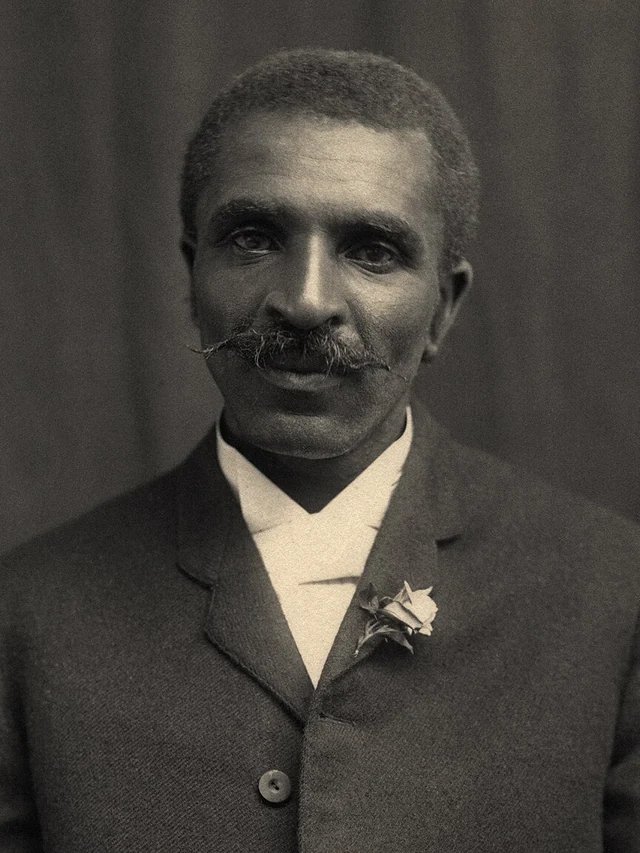
George Washington Carver
The Teacher Who Helped Worn-Out Soil Grow Again
Born into slavery and turned away from a college, he became a teacher who helped poor farmers feed their families.
- about 1864 to 1943
- United States
- Life science

A life of discovery
The question they chased
George Washington Carver was born into slavery near Diamond, Missouri, probably around 1864. No one knows the exact date. When he was about a week old, raiders took him, his mother, and his sister and sold them in Kentucky. Only the baby was found and brought home by an agent of Moses Carver, the man who owned them. After slavery ended, Moses and his wife, Susan, raised George, and Susan taught him to read.
George was a sickly boy who loved plants and collected specimens from the woods. No local school would take Black children, so at about 11 or 12 he moved to Neosho to attend school. He was later accepted at Highland College in Kansas, but the college turned him away once it saw he was Black. He did not quit. He studied art and music at Simpson College, where his art teacher Etta Budd encouraged him toward botany. At Iowa State he was the first Black student, and he earned his master's degree in 1896. That same year Booker T. Washington invited him to lead the agriculture department at Tuskegee Institute in Alabama.
The big ideas
What George figured out
Cotton grown year after year used up the nitrogen that plants need. Carver urged farmers to rotate cotton with legumes like peanuts and sweet potatoes, which put nitrogen back. Healthier soil meant bigger harvests for the next year.
Carver wanted to reach farmers where they lived. So he designed a wagon, called the Jesup wagon, that carried lessons and tools to them. It was named for Morris Ketchum Jesup, who paid for it.
The boll weevil, a beetle that wrecks cotton, spread across the South after the 1890s, and farmers needed other crops they could sell. Carver researched many uses for peanuts and sweet potatoes, from foods to dyes. He did not invent peanut butter, but his teaching and testimony helped peanuts gain respect.
Key moments
How it unfolded
- 1890Carver begins studying art and music at Simpson College in Iowa.
- 1891He becomes the first Black student at Iowa State Agricultural College.
- 1896He earns his master's degree and joins Tuskegee Institute, where he will teach for 47 years.
- 1916He is made a member of the Royal Society of Arts in Britain.
- 1921He testifies before Congress in support of a tariff on imported peanuts, and a tariff passes in 1922.
- 1943Carver dies on January 5 and is buried next to Booker T. Washington at Tuskegee.
The person behind the science
The gentle teacher who would not quit
Carver's early life had more loss than most people face. He never knew his father and was taken from his mother as a baby. Without a school to attend, he learned from Susan Carver and then left home as a boy to find one. The rejection at Highland came after he had been told he could enroll. Instead of giving up, he homesteaded a piece of land and kept running his own experiments with plants. He described himself as frail as a child, and a biographer connected that frailty to his high-pitched voice.
People helped him at the right moments. Susan taught him to read, Mariah Watkins gave him a home in Neosho, and Etta Budd saw his talent in botany. Booker T. Washington gave him work he could grow into. Carver never married, though he courted Sarah Hunt for three years before she moved to California. He wrote in 1931 that as a boy he felt God come into his heart one afternoon in the barn loft. From 1906 he led a Sunday Bible class for students who asked him to. Late in life he gave nearly $60,000 of his savings to start a foundation at Tuskegee.
Small things that make them human
- A high, soft voiceA biographer links his high-pitched voice to his weak health as a child.
- Hands never idleHe painted and crocheted, and as a boy he learned to cook and embroider while helping Susan Carver.
- Eight cardinal virtuesOne on his list was to be clean both inside and out.
- A last paintingAt his death he was working on a Christmas card wishing peace on earth and goodwill to all.
A few surprising facts
Did you know
He did not invent peanut butter. Marcellus Edson patented a way to make it in 1884, years before Carver reached Tuskegee.
A painting of his, of a yucca and cactus, hung at the 1893 World's Columbian Exposition.
He crocheted lace and doilies, and some of his work has been put on display.
His friend Henry Ford later had an elevator installed in the Tuskegee dormitory where Carver lived.
Why it still matters
What this means for you
Carver's story is a reminder that talent can be found where people least expect it, and that a closed door does not have to end a life. His farming lessons still point toward ideas like crop rotation and healthy soil. His grave carries the words that he found happiness and honor in being helpful to the world. Students can see in him a plain way to measure a life, which is how much good it does for others.
Make the ground better for the next season.
CURIOSITY ✦ RIGOR ✦ DISCOVERYTalk about it
Questions for your table
- Carver was turned away from a college because of his race, and he kept going. Who or what helps you keep going when a door closes?
- He took lessons to farmers instead of waiting for them to come. How could you share something you know with people who cannot reach you easily?
- Many people think Carver invented peanut butter, but he did not. Why is it important to check a popular story before repeating it?
Try it today
Three small steps
- Notice: Look at the soil in a garden bed or a flower pot and describe its color, wetness, and anything living in it.
- Question: Ask why a farmer might plant a different crop in a field each year instead of the same one.
- Test: Plant bean seeds in two cups, one with plain sand and one with rich potting soil, water both the same, and compare growth for two weeks.