
MATH · GEOMETRY · PROOF
Euclid
The Man Who Built Math Like a Staircase
We know almost nothing about his life, yet his book taught people how to prove things for more than two thousand years.
- Active about 300 BC
- Greece and Egypt
- Math

A life of discovery
The question they chased
Euclid worked in Alexandria, Egypt, around 300 BC. That is nearly everything the record says about him. We do not know where he was born, when he died, or what he looked like. His big question was how anyone can be sure a math statement is true in every case and not only the ones they tried.
He wrote the “Elements,” thirteen books of geometry and number theory. Much of its content came from earlier mathematicians such as Eudoxus and Theaetetus. His gift was organizing it. He started with plain definitions and five starting rules, then built each proof on the ones before, like steps on a staircase. He also wrote “Optics,” “Data,” and “Phaenomena.”
The big ideas
What Euclid figured out
Euclid starts with a few simple rules everyone accepts, such as that any two points can be joined by a straight line. Every later claim must be built from those rules and from claims already proven. Book 1 climbs all the way to the Pythagorean theorem.
A prime is a number that only divides evenly by 1 and itself. Euclid showed there are infinitely many. Suppose you had a complete list. Multiply them all and add 1. The new number has a prime factor that cannot be on the list, so the list was never complete.
One of his five rules, about parallel lines, always seemed wordier than the rest. For centuries mathematicians tried to prove it from the others. In the 1800s they found that geometries exist where it fails, and those ideas later helped physics describe curved space.
Key moments
How it unfolded
- About 300 BCEuclid is working in Alexandria and writes the “Elements.”
- About 100 ADThe oldest surviving pieces of the “Elements” are written on papyrus fragments.
- 1482A printed edition of the “Elements” appears in Venice.
- 1570The first English translation is published.
- 1899David Hilbert publishes a modern set of starting rules that fills gaps Euclid left.
The person behind the science
The man we cannot see
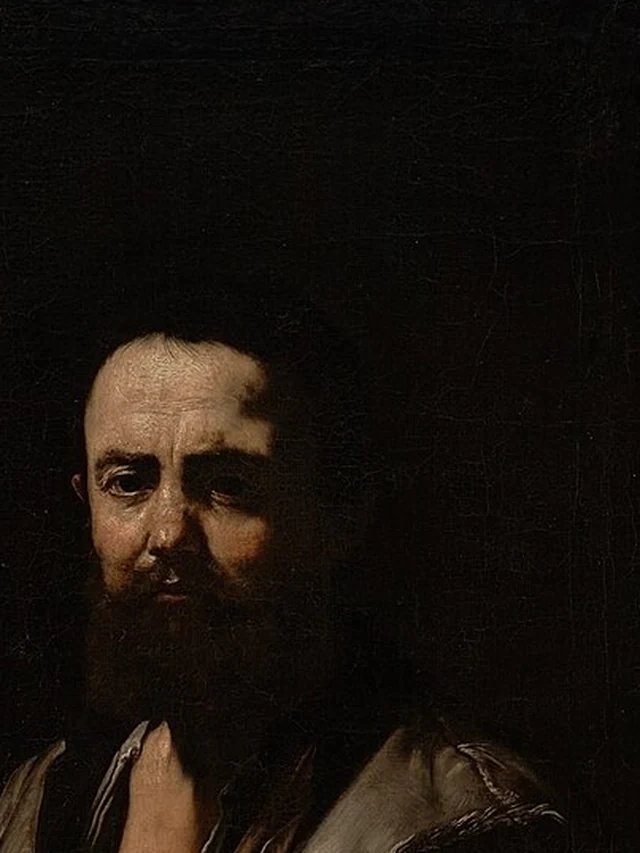
Here is what the record gives us about Euclid. No letters survive. No diary. No portrait. No grave. Medieval Arabic writers supplied a birthplace in Tyre and a father named Naucrates, but historians do not trust those details. Almost everything we read about him comes from Proclus, who lived about seven hundred years later, and from Pappus. Any feeling or fear we put into his mind would be invented, so we will not.
What the record does show is the shape of his work. He gave credit to the thinkers before him by keeping their results alive. Apollonius, a great mathematician, is reported to have studied with Euclid's students in Alexandria. That suggests Euclid built a school of thought and passed it on. And his book had a clear aim. It was written in an order a beginner could climb. By the 2nd century AD it was already a standard school text.
Small things that make them human
- A story too tidyProclus says King Ptolemy asked for a shortcut and Euclid replied that there is no royal road to geometry. A similar story is told about another mathematician and another king, so treat it as tradition.
- Wrong Euclid for agesMedieval writers mixed him up with Euclid of Megara and even gave him a false birthplace.
- A teacher of teachersApollonius is reported to have learned from his students, which hints at a lasting school.
- Credit sharedEuclid collected the work of Eudoxus, Theaetetus, and others instead of claiming it all.
A few surprising facts
Did you know
For centuries many writers confused him with Euclid of Megara, a philosopher who studied with Socrates. Renaissance scholars finally sorted it out by checking the dates.
Most results in the “Elements” were discovered by others. Euclid's skill was choosing, ordering, and proving them clearly, and filling gaps.
After the Bible, the “Elements” is often said to be the most translated, published, and studied book in the Western world.
He also wrote a book about common mistakes in reasoning called “Pseudaria.” It is lost, but historians believe it was his.
Why it still matters
What this means for you
Every time you write a proof in geometry class, you are walking up Euclid's staircase. He taught the world that a claim needs reasons, and that the reasons must reach back to something we agreed on. That habit helps in science, law, computing, and any argument. It also asks a student to check each step rather than trust a loud voice. His life reminds us that someone can shape the world and still be mostly unknown.
Start simple. Prove every step.
CURIOSITY ✦ RIGOR ✦ DISCOVERYTalk about it
Questions for your table
- Euclid built on other people's discoveries. How do you decide when to credit a friend or a source for your own work?
- We know almost nothing about him, yet his book lasted. What do you want your work to say about you if people never meet you?
- Why might it matter to check each step of an argument instead of trusting the answer at the end?
Try it today
Three small steps
- Notice: Look at a floor tile pattern or a brick wall and name every shape and angle you can see.
- Question: Pick a claim someone makes this week and ask what it is built on.
- Test: Draw any triangle, tear off its three corners, and line them up to see if they make a straight line.