
ANATOMY · MEDICINE · OBSERVATION
Andreas Vesalius
The Man Who Trusted His Own Eyes
For centuries doctors trusted an ancient book about the human body. Andreas Vesalius looked for himself and wrote down what he saw.
- 1514 to 1564
- Habsburg Netherlands and Italy
- Life science
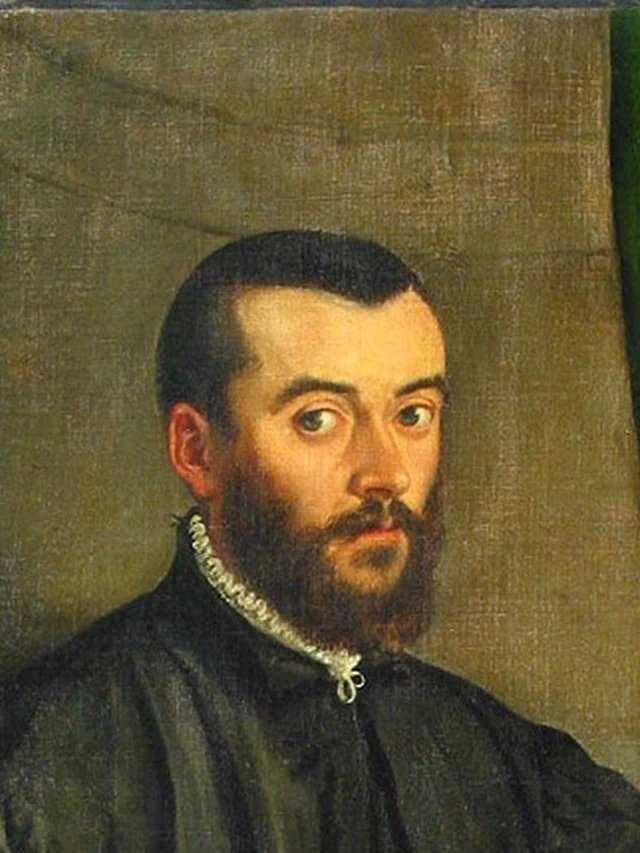

A life of discovery
The question they chased
Andreas Vesalius was born in Brussels on the last day of 1514. His father was an apothecary to the emperor, so he grew up close to the court and close to medicine. He studied at Leuven and then Paris, until war between the empire and France pushed him out in 1536. He graduated in 1537, and on that same day the University of Padua offered him the chair of surgery and anatomy.
He carried one question into that job. Do the books match the body? In Bologna he found that the great Greek doctor Galen had mostly described animals, mainly Barbary macaques, because human dissection was restricted in Galen's day. At Padua Vesalius put dissection at the center of his teaching and urged students to do it themselves. In 1543, at age 28, he published a seven-book work called “De humani corporis fabrica” in Basel. It had about 273 illustrations and it corrected Galen again and again.
The big ideas
What Andreas figured out
Before Vesalius, many medical teachers read Galen aloud and trusted the page over the body. Vesalius reversed that order. He opened the body, checked what was there, and only then trusted the book. That habit is the heart of all science.
Galen had said the human jaw was two bones. Vesalius showed it is one. Galen had also described a net of vessels at the base of the brain that humans do not have. Each correction was small, but together they showed that a famous book could be wrong.
Galen taught that blood seeped through tiny pores in the wall between the two lower chambers of the heart. Vesalius searched for those pores and could not find them. He said so in print. It took courage to report a thing he failed to see.
Key moments
How it unfolded
- 1514Andreas is born in Brussels on 31 December.
- 1537He graduates at Leuven and is offered the chair of surgery and anatomy at Padua the same day.
- 1543He publishes the Fabrica in Basel and dedicates it to Emperor Charles V.
- 1551An inquiry at Salamanca clears his work after attacks from critics.
- 1555He becomes physician to King Philip II and publishes a revised Fabrica.
- 1564He dies on the Greek island of Zakynthos on the voyage home from Jerusalem.
The person behind the science
The young doctor who would not just nod along
Vesalius paid a price for trusting his eyes. Sylvius, the teacher who had trained him in Paris, became a persistent critic. At court, rivals mocked his skill with the knife. Even after the Salamanca inquiry cleared his work in 1551, the attacks did not stop. For eleven years he served the emperor, treating injuries from battles and tournaments, while the argument over Galen followed him everywhere.
Not everyone turned away. His father had served the court, and Charles V made Vesalius his imperial physician. In the 1540s he married Anne van Hamme, and they had a daughter, also named Anne. In 1564 he left Spain on a pilgrimage to the Holy Land, and historians think it was probably a way to leave the Spanish court. He learned that Venice wanted him back at Padua. He died on the return voyage after his ship was wrecked. He was in debt, and a benefactor paid for his funeral.
Small things that make them human
- Copied the moment it appearedPirated editions of the Fabrica showed up almost at once, so his own work spread faster than he could control.
- A book for studentsHe also wrote a shorter Epitome for students, which he dedicated to Philip II.
- Still arguing at the endHis reply to another anatomist, Gabriele Fallopio, came out in 1564, the year he died.
- A daughter named AnneTheir daughter Anne lived until 1588, long after her father was gone.
A few surprising facts
Did you know
Galen's famous human anatomy was built largely on animals. Vesalius was among the first to prove it, using his own dissections.
Other physicians mocked him as a mere barber-surgeon.
His former teacher Jacques Dubois, called Sylvius, claimed the human body must have changed since Galen's time rather than admit Galen was wrong.
A skeleton Vesalius prepared in Basel in 1543 is the oldest surviving anatomical preparation, and the University of Basel still displays it.
Why it still matters
What this means for you
Vesalius shows what to do when an expert says one thing and your careful eyes say another. He did not shout. He checked, drew what he found, and let others check him. Every lab report you write asks you to do the same thing. Write what you actually saw, even when the textbook says otherwise. And be kind to the textbook writers, because Galen was a brilliant man working with what he had.
Look closely. Then say what you see.
CURIOSITY ✦ RIGOR ✦ DISCOVERYTalk about it
Questions for your table
- Vesalius reported that he could not find the heart pores Galen described. When is it hard to say “I do not see it” in class or with friends, and why is it worth doing?
- Critics said the body must have changed rather than admit Galen was wrong. Have you ever defended an idea just because it was familiar? What helped you let go?
- Vesalius kept working while powerful people mocked him. Who around you helps you keep going when others doubt your work?
Try it today
Three small steps
- Notice: Pick a leaf, a bone from a chicken dinner, or your own hand and spend three full minutes drawing only what you actually see, not what you think it looks like.
- Question: Find one fact you were taught that you have never checked yourself, and write down how you could check it.
- Test: Ask a friend to describe an object from memory, then compare their description with the real object and list what differs.