
VACCINES · IMMUNITY · MEDICINE
Edward Jenner
The Country Doctor Who Paid Attention
Smallpox killed and scarred millions. Edward Jenner noticed who was spared, tested his idea, and gave the world its first vaccine.
- 1749 to 1823
- England
- Life science
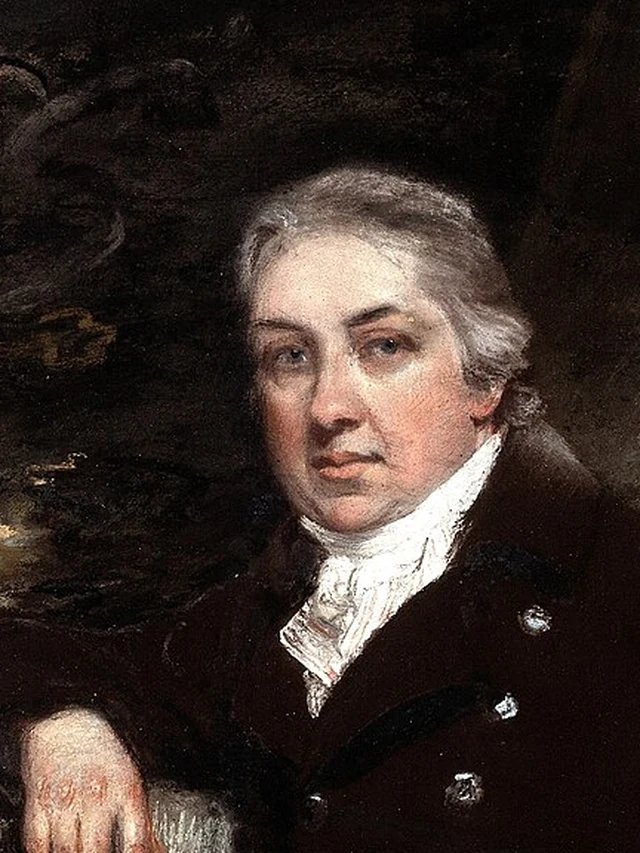

A life of discovery
The question they chased
Edward Jenner was born in Berkeley, Gloucestershire, on 17 May 1749. His father was the village vicar. Both of his parents died in 1754, when he was five, and his older brother Stephen took charge of him. As a boy he collected fossils. At 13 he began an apprenticeship with a surgeon, and in 1770 he went to London to learn under the famous surgeon John Hunter. He returned to Berkeley in 1773 to work as a country doctor.
Smallpox was a terrible disease then. Jenner noticed that some patients did not catch it, and many of them had earlier had cowpox, a mild illness from cows. On 14 May 1796 he gave eight-year-old James Phipps matter from a cowpox blister on the hand of a milkmaid named Sarah Nelmes. On 1 July he tested the boy with smallpox matter. James stayed well. In 1798 Jenner published his findings on 23 cases.
The big ideas
What Edward figured out
Cowpox is a close cousin of smallpox. Catching the mild one taught the body how to fight the dangerous one. Today we call that kind of protection immunity. A vaccine gives your body a safe practice round.
Jenner called cowpox by a Latin name, Variolae vaccinae, which means smallpox of the cow. The words vaccine and vaccination come from it. Every time you hear them, you hear his work.
One boy proves little. Jenner gathered 23 cases showing that cowpox gave lasting protection and published them so other doctors could judge for themselves. A good idea gets stronger when it is checked again and again.
Key moments
How it unfolded
- 1749Edward is born in Berkeley on 17 May.
- 1770He goes to London to study surgery and anatomy under John Hunter.
- 1796He gives the first cowpox inoculation to James Phipps on 14 May.
- 1798He publishes his findings on 23 cases of cowpox and protection.
- 1802Parliament grants him 10,000 pounds.
- 1823He dies at home in Berkeley on 26 January.
The person behind the science
The quiet doctor of Berkeley
Jenner knew loss from the start. He lost both parents at five. As a boy he went through smallpox inoculation, and the account of his life says it affected his health for the rest of his life. Later he lost his wife, Catherine Kingscote, to tuberculosis in 1815. His eldest son, Edward Robert, died in 1810 at age 21. Jenner also faced disappointment. Friends told him to gather more cases before publishing, and his first paper on cowpox for the Royal Society was not published.
Many people stood with him. His brother raised him, and John Hunter stayed in touch for years and encouraged his love of nature. Jenner was sociable, played the flute, wrote verse, and was known as a good host. He served as a justice of the peace and as mayor of Berkeley in 1821. He was also kind to his neighbors. The day before he died, he had fuel delivered to poor families in a nearby village.
Small things that make them human
- Fossils and birdsCollecting fossils as a boy and later studying birds trained his eye to notice small things.
- Stubborn about his workHe refused to take an exam on ancient Greek medical books to join the London College of Physicians, and he was never elected.
- Music and verseHe wrote poems and played the flute in his free time.
- Three childrenHe and Catherine had three children, and he vaccinated his own son Robert at 11 months old.
A few surprising facts
Did you know
Jenner also worked out how a baby cuckoo behaves. The newly hatched bird pushes the host's eggs and chicks out of the nest.
He may have met his future wife because one of his trial balloons came down in her family's park, though the story is not certain.
Napoleon had a medal made in his honor and ordered French soldiers to be vaccinated.
In 1796 there were no rules about testing on children as there are today. We can honor his discovery and still be glad modern tests have strong protections.
Why it still matters
What this means for you
Because of vaccination, smallpox was declared eradicated by the World Health Organization in 1980. That is a disease gone from the earth. Jenner's story shows how powerful it is to pay attention to ordinary details and to ask why. It also shows that careful testing matters, because a good idea needs good evidence. And he did all of it as a country doctor, not a famous professor.
Notice who is spared, then ask why.
CURIOSITY ✦ RIGOR ✦ DISCOVERYTalk about it
Questions for your table
- Jenner noticed a pattern others ignored. What is a pattern in your own life, in school or sports, that you could study more carefully?
- He lost both parents as a small child and later lost his wife and a son. What do you think helps people keep caring about others after loss?
- Rules about testing on children changed after Jenner's day. Why do you think those rules matter, and who should decide them?
Try it today
Three small steps
- Notice: Spend one day noticing a repeating pattern, such as who gets sick in your family, which plants wilt first, or which times you feel tired.
- Question: Write down one why question about that pattern and who you could ask for the answer.
- Test: Plan a fair test for your question, listing what you will keep the same and what you will change, and ask a teacher to look at it.