
MATH · ALGEBRA · ALGORITHMS
Muhammad ibn Musa al-Khwarizmi
The Man Who Gave Us Two Words
In Baghdad, he wrote a handbook for solving real problems, and his name and book title became the words algorithm and algebra.
- about 780 to about 850
- Iraq
- Math

A life of discovery
The question they chased
Muhammad ibn Musa al-Khwarizmi was born around 780. Where he came from is debated. Around 820 he was working in Baghdad at the House of Wisdom under Caliph al-Ma'mun. He wanted to make solving number problems simple enough that ordinary people could use the methods and trust them.
His book “al-Jabr” sorted linear and quadratic equations into six standard forms and solved each one with clear steps. He also explained a way to write numbers with ten digits, where the place of a digit tells its value. That arithmetic book reached Europe in Latin translation in the 1100s. He wrote on geography and astronomy too, and listed coordinates for about 2,400 places.
The big ideas
What Muhammad figured out
The title “al-Jabr” means completion, and “al-muqabala” means balancing. Both are ways to move terms around an equation while keeping it fair. Say a square plus ten of its sides equals 39. Try a side of 3. Nine plus thirty makes 39, so it works.
In his arithmetic book, a digit means different things in different places. A 5 in 50 is not a 5 in 5. A zero holds an empty place so the other digits stay put. This made adding, subtracting, and multiplying on paper much easier.
A procedure that works the same way every time is called an algorithm. The word comes from the Latin form of his name, Algoritmi. When a phone app solves a problem, it follows a long list of such steps.
Key moments
How it unfolded
- About 780He is born, though his birthplace is debated.
- About 820He writes “al-Jabr” in Baghdad under Caliph al-Ma'mun.
- 833He completes a geography listing about 2,400 places with their coordinates.
- 1100sHis arithmetic book reaches Europe in Latin translation.
- About 850He dies, exact date uncertain.
The person behind the science
The man behind the name
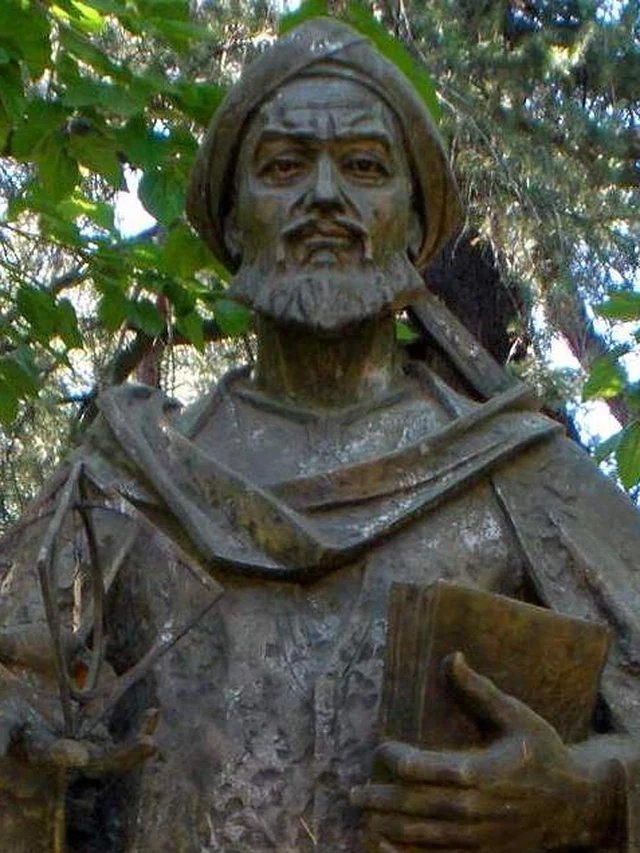
We know very little about his private life. No letters, no diary, and no portrait survive. We do not know if he had a family. We cannot say what he feared or what he found hard. Scholars even disagree about where he was born. Anyone who tells you what he felt is guessing, and we will not.
What the record does show is a choice. He wrote his algebra with the encouragement of Caliph al-Ma'mun. His preface says the caliph encouraged him to write a plain book of use to people. He took a ruler's request and answered it with a handbook for farmers, heirs, merchants, and canal builders. Scholars judge him differently. One calls him the father of algebra. Another says his achievements were modest. That is how real history looks. People are measured by evidence, and the evidence is still argued over.
Small things that make them human
- A caliph's requestThe preface says al-Ma'mun encouraged the book. That is the closest we get to a person-to-person detail.
- No x anywhereHe explained every step in sentences, so a reader needed patience and care.
- A name that traveledLatin writers turned “al-Khwarizmi” into Algoritmi, and that became algorithm.
- Experts still argueHistorians disagree about where he was born, and about how original he was.
A few surprising facts
Did you know
He wrote every equation in words. There was no x and no plus sign in his book.
His preface says the book is for real life, including inheritance, legacies, dividing property, lawsuits, trade, measuring land, and digging canals.
Historians disagree on his origin. His name points to Khwarazm in Central Asia, but some scholars think the clue is a copying mistake.
His original Arabic arithmetic book is lost. Only a Latin version survives, and it differs from the original.
Why it still matters
What this means for you
Every time you solve for an unknown, balance both sides of an equation, or follow a clear set of steps, you are using ideas he helped pass on. Every app and computer program is built from algorithms. His life also shows something quieter. A person can serve everyday needs, write simply, and still leave two words for the whole world. And you can honor someone without knowing all about them. Say what is known and what is not.
Make it clear enough to use.
CURIOSITY ✦ RIGOR ✦ DISCOVERYTalk about it
Questions for your table
- His book was meant for everyday problems like inheritance and trade. What math problems have you seen in real life?
- We know little about him personally. How do we judge a person's work when we know little about their life?
- He wrote every step in words. Why might writing out steps in plain language help you understand a math idea?
Try it today
Three small steps
- Notice: Find a place where you follow a step-by-step list today, like a recipe or a game setup.
- Question: Ask which steps in that list could be changed without breaking the result.
- Test: Write out in words how to solve x + 7 = 12, with no symbols, and see if a friend can follow it.