
Lecture X
Bees and Flowers
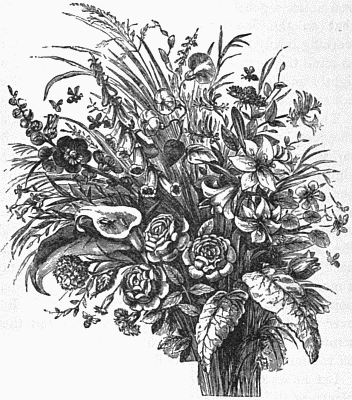
Whatever thoughts each one of you may have brought to the lecture to-day, I want you to throw them all aside and fancy yourself to be in a pretty country garden on a hot summer's morning. Perhaps you have been walking, or reading, or playing, but it is getting too hot now to do
As you lie there thinking of nothing in particular, except how pleasant it is to be idle now and then, you notice a gentle buzzing close to you, and you see that on the flower-bed close by, several bees are working busily among the flowers. They do not seem to mind the heat, nor to wish to rest; and they fly so lightly and look so happy over their work that it does not tire you to look at them.
That great humble-bee takes it leisurely enough as she goes lumbering along, poking her head into the larkspurs, and remaining so long in each you might almost think she had fallen asleep. The brown hive-bee, on the other hand, moves busily and quickly among the stocks, sweet peas, and mignonette. She is evidently out on active duty, and means to get all she can from each flower, so as to carry a good load back to the hive. In some blossoms she does not stay a moment, but draws her head back directly she has popped it in, as if to say, "No honey there." But over the full blossoms she lingers a little, and then scrambles out again with her drop of honey, and goes off to seek more in the next flower.
Let us watch her a little more closely. There are plenty of different plants growing in the flower-bed, but, curiously enough, she does not go first to one kind and then to another; but keeps to one, perhaps the mignonette, the whole time, till she flies away. Rouse yourself up to follow her, and you will see she takes
Then when she comes back again she may perhaps go to another kind of flower, such as the sweet peas, for instance, and keep to them during the next journey, but it is more likely that she will be true to her old friend the mignonette for the whole day.
We all know why she makes so many journeys between the garden and the hive, and that she is collecting drops of honey from each flower, and carrying it to be stored up in the honeycomb for winter's food. How she stores it, and how she also gathers pollen-dust for her bee-bread, we saw in the last lecture; to-day we will follow her in her work among the flowers, and see, while they are so useful to her, what she is doing for them in return.
We have already learnt from the life of a primrose that plants can make better and stronger seeds when they can get pollen-dust from another plant, than when they are obliged to use that which grows in the same flower; but I am sure you will be very much surprised to hear that the more we study flowers the more we find that their colours, their scent, and their curious shapes are all so many baits and traps set by nature to entice insects to come to the flowers, and carry this pollen-dust from one to the other.
So far as we know, it is entirely for this purpose that the plants form honey in different parts of the flower, sometimes in little bags or glands, as in the petals of the buttercup flower, sometimes in clear
You will remember that the plants of the coal had no bright or conspicuous flowers. Now we can understand why this was, for there were no flying insects at that time to carry the pollen-dust from flower to flower, and therefore there was no need of coloured flowers to attract them. But little by little, as flies, butterflies, moths and bees began to live in the world, flowers too began to appear, and plants hung out these gay-coloured signs, as much as to say, "Come to me, and I will give you honey if you will bring me pollen-dust in exchange, so that my seeds may grow healthy and strong."
We cannot stop to inquire to-day how this all gradually came about, and how the flowers gradually put on gay colours and curious shapes to tempt the insects to visit them; but we will learn something about the way they attract them now, and how you may see it for yourselves if you keep your eyes open.
For example, if you watch the different kinds of grasses, sedges and rushes, which have such tiny flowers that you can scarcely see them, you will find that no insects visit them. Neither will you ever find bees buzzing round oak-trees, nut-trees, willows, elms or birches. But on the pretty and sweet-smelling apple-blossoms, or the strongly scented lime-trees, you will find bees, wasps, and plenty of other insects.
The reason of this is that grasses, sedges, rushes, nut-trees, willows, and the others we have mentioned, have all of them a great deal of pollen-dust, and as the wind blows them to and fro, it wafts the dust from one flower to another, and so these plants do not want the insects, and it is not worth their while to give out honey, or to have gaudy or sweet-scented flowers to attract them.
But wherever you see bright or conspicuous flowers you may be quite sure that the plants want the bees or some other winged insect to come and carry their pollen for them. Snowdrops hanging their white heads among their green leaves, crocuses with their violet and yellow flowers, the gaudy poppy, the large-flowered hollyhock or the sunflower, the flaunting dandelion, the pretty pink willow-herb, the clustered blossoms of the mustard and turnip flowers, the bright blue forget-me-not and the delicate little yellow trefoil, all these are visited by insects, which easily catch sight of them as they pass by and hasten to sip their honey.
Sir John Lubbock has shown that bees are not only attracted by bright colours, but that they even know one colour from another. He put some honey on slips of glass with coloured papers under them, and when he had accustomed the bees to find the honey always on the blue glass, he washed this glass clean, and put the honey on the red glass instead. Now if the bees had followed only the smell of the honey, they would have flown to the red glass, but they did not. They went first to the blue glass, expecting to
Is it not beautiful to think that the bright pleasant colours we love so much in flowers, are not only ornamental, but that they are useful and doing their part in keeping up healthy life in our world?
Neither must we forget what sweet scents can do. Have you never noticed the delicious smell which comes from beds of mignonette, thyme, rosemary, mint, or sweet alyssum, from the small hidden bunches of laurustinus blossom, or from the tiny flowers of the privet? These plants have found another way of attracting the insects; they have no need of bright colours, for their scent is quite as true and certain a guide. You will be surprised if you once begin to count them up, how many white and dull or dark-looking flowers are sweet-scented, while gaudy flowers, such as the tulip, foxglove and hollyhock, have little or no scent. And then, just as in the world we find some people who have everything to attract others to them, beauty and gentleness, cleverness, kindliness, and loving sympathy, so we find some flowers, like the beautiful lily, the lovely rose, and the delicate hyacinth, which have colour and scent and graceful shapes all combined.
But we are not yet nearly at an end of the contrivances of flowers to secure the visits of insects. Have you not observed that different flowers open and close at different times? The daisy receives its name day's eye, because it opens at sunrise and closes at sunset,[OE]nothera biennis) and the night campion (Silene noctiflora) spread out their flowers just as the daisy is going to bed.
What do you think is the reason of this? If you go near a bed of evening primroses just when the sun is setting, you will soon be able to guess, for they will then give out such a sweet scent that you will not doubt for a moment that they are calling the evening moths to come and visit them. The daisy opens by day, because it is visited by day insects, but those particular moths which can carry the pollen-dust of the evening primrose, fly only by night, and if this flower opened by day other insects might steal its honey, while they would not be the right size or shape to touch its pollen-bags and carry the dust.
It is the same if you pass by a honeysuckle in the evening; you will be surprised how much stronger its scent is than in the daytime. This is because the sphinx hawk-moth is the favourite visitor of that flower, and comes at nightfall, guided by the strong scent, to suck out the honey with its long proboscis, and carry the pollen-dust.
Again, some flowers close whenever rain is coming. The pimpernel (Anagallis arvensis) is one of these, hence its name of the "Shepherd's Weather-glass." This little flower closes, no doubt, to prevent its pollen-dust being washed away, for it has no honey; while other flowers do it to protect the drop of honey at the bottom of their corolla. Look at the daisies for example when a storm is coming on; as the sky grows dark and heavy, you will see them shrink up and close till the sun shines again. They do this
And now you will see why cup-shaped flowers so often droop their heads—think of the harebell, the snowdrop, the lily-of-the-valley, the campanula, and a host of others; how pretty they look with their bells hanging so modestly from the slender stalk! They are bending down to protect the honey-glands within them, for if the cup became full of rain or dew the honey would be useless, and the insects would cease to visit them.
But it is not only necessary that the flowers should keep their honey for the insects, they also have to take care and keep it for the right kind of insect. Ants are in many cases great enemies to them, for they like honey as much as bees and butterflies do, yet you will easily see that they are so small that if they creep into a flower they pass the anthers without rubbing against them, and so take the honey without doing any good to the plant. Therefore we find numberless contrivances for keeping the ants and other creeping insects away. Look for example at the hairy stalk of the primrose flower; those little hairs are like a forest to a tiny ant, and they protect the flower from his visits. The Spanish catchfly (Silene otites), on the other hand, has a smooth, but very gummy stem, and on this the insects stick, if they try to climb. Slugs and snails too will often attack and bite flowers, unless they are kept away by thorns and bristles, such as we find on the teazel and the burdock. And so we are gradually learning that everything which a plant does
But as we cannot wander among many plants to-day, let us take a few which the bees visit, and see how they contrive not to give up their honey without getting help in return. We will start with the blue wood-geranium, because from it we first began to learn the use of insects to flowers.
More than a hundred years ago a young German botanist, Christian Conrad Sprengel, noticed some soft hairs growing in the centre of this flower, just round the stamens, and he was so sure that every part of a plant is useful, that he set himself to find out what these hairs meant. He soon discovered that they protected some small honey-bags at the base of the stamens, and kept the rain from washing the honey away, just as our eyebrows prevent the perspiration on our faces from running into our eyes. This led him to notice that plants take great care to keep their honey for insects, and by degrees he proved that they did this in order to tempt the insects to visit them and carry off their pollen.
The first thing to notice in this little geranium flower is that the purple lines which ornament it all point directly to the place where the honey lies at the bottom of the stamens, and actually serve to lead the bee to the honey; and this is true of the veins and marking of nearly all flowers except of thoseand in these they would be useless for the insects would not see them.
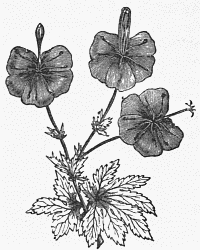 Fig. 58.—Geranium sylvaticum, the Wood Geranium.
In the left-hand flower the stamens are all lying down. In the middle flower five stamens clasp the stigma. In the right-hand flower the stigma is open after all the stamens have fallen.
When the geranium first opens, all its ten stamens are lying flat on the corolla or coloured crown, as in the left-hand flower in Fig. 58, and then the bee cannot get at the honey. But in a short time five stamens begin to raise themselves and cling round the stigma or knob at the top of the seed-vessel, as in the middle flower. Now you would think they would leave their dust there. But no! the stigma is closed up so tight that the dust cannot get on to the sticky part. Now, however, the bee can get at the honey-glands on the outside of the raised stamens; and as he sucks it, his back touches the anthers or dust-bags, and he carries off the pollen. Then, as soon as all their dust is gone, these five stamens fall down, and the other five spring up. Still, however, the stigma remains closed, and the pollen of these stamens, too, may be carried away
But its own pollen is all gone, how then will it get any? It will get it from some bee who has just taken it from another and younger flower; and thus you see the blossom is prevented from using its own pollen, and made to use that of another blossom, so that its seeds may grow healthy and strong.
The garden nasturtium, into whose blossom we saw the humble-bee poking his head, takes still more care of its pollen-dust. It hides its honey down at the end of its long spur, and only sends out one stamen at a time instead of five like the geranium; and then, when all the stamens have had their turn, the sticky knob comes out last for pollen from another flower.
All this you may see for yourselves if you find geraniums[19] in the
hedges, and nasturtiums in your garden. But even if you have not these,
you may learn the history of another flower quite as curious, and which
you can find in any field or lane even near London. The common
dead-nettle (Fig. 59) takes a great deal of trouble in order that the
bee may carry off its pollen. When you have found one of these plants,
take a flower from the ring all round the stalk and tear it gently open,
so that you can see down its throat. There, just at the very bottom, you
willf, No. 2, Fig. 59), and you will
guess at once that these are to protect a drop of honey below. Little
insects which would creep into the flower and rob it of its honey
without touching the anthers of the stamens (a, Fig. 59) cannot get
past these hairs, and so the drop is kept till the bee comes to fetch
it.
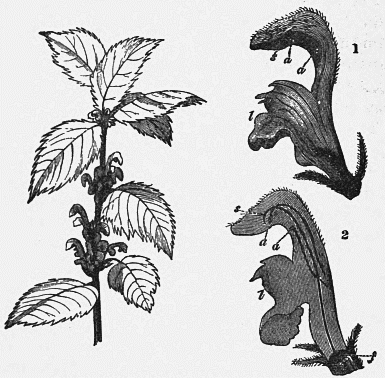 Fig. 59.—Flower of the Dead-Nettle (Lamium album).
1, Whole.
2, Cut in half.
f, Fringe of hairs protecting honey at base.
s, Stigma.
a, Anthers of stamens.
l, Lip of flower.
Now look for the stamens: there are four of them (a a), two long and two short, and they are quitel, and thrusts her head down the tube, she first of all knocks her back against the little forked tip s. This is the sticky stigma, and she leaves there any dust she has brought from another flower; then, as she must push far in to reach the honey, she rubs the top of her back against the anthers a a, and before she comes out again has carried away the yellow powder on her back, ready to give it to the next flower.
Do you remember how we noticed at the beginning of the lecture that a bee always likes to visit the same kind of plant in one journey? You see now that this is very useful to the flowers. If the bee went from a dead-nettle to a geranium, the dust would be lost, for it would be of no use to any other plant but a dead-nettle. But since the bee likes to get the same kind of honey each journey, she goes to the same kind of flowers, and places the pollen-dust just where it is wanted.
There is another flower, called the Salvia, which belongs to the same
family as our dead-nettle, and I think you will agree with me that its
way of dusting the bee's back is most clever. The Salvia (Fig. 60) is
shaped just like the dead-nettle, with a hood and a broad lip, but
instead of four stamens it has only two, the other two being shrivelled
up. The two that are left have a very strange shape, for the stalk or
filament of the stamen (1 f) is very short, while the anther, which
is in most flowers two little bags stucka b, with a little dust-bag at one end only. In 1,
Fig. 60, you only see one of these stems, because the flower is cut in
half, but in the whole flower, one stands on each side just within the
lip. Now, when the bee puts her head into the tube to reach the honey,
she passes right between these two swinging anthers, and knocking
against the end b pushes it before her and so brings the dust-bag a
plump down on her back, scattering the dust there! You can easily try
this by thrusting a pencil into any Salvia flower, and you will see the
anther fall.
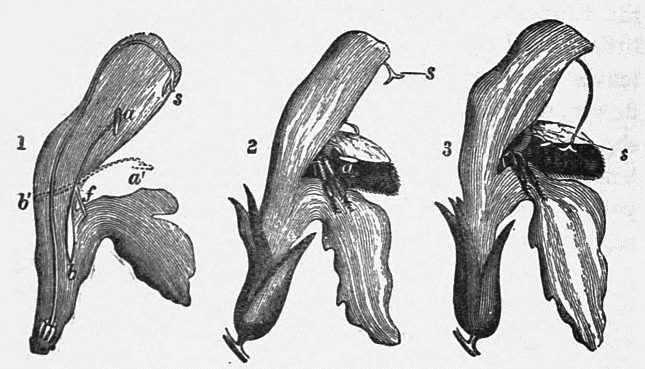 Fig. 60.—Flower of the Salvia.
1. Half a flower, showing the filament f, the swinging anther a b,
b' a', and the stigma s.
2. Bee entering the flower pushes the
anther so that it takes the position a' b', No. 1, and hits him on the
back.
3. Older flower: stigma touching the bee.
You will notice that all this time the bee does not touch the sticky stigma which hangs high above her;
Tell me, has not the Salvia, while remaining so much the same shape as the dead-nettle, devised a wonderful contrivance to make use of the visits of the bee?
The common sweet violet (Viola odorata) or the dog violet (Viola
canina), which you can gather in any meadow, give up their pollen-dust
in quite a different way from the Salvia, and yet it is equally
ingenious. Everyone has noticed what an irregular shape this flower has,
and that one of its purple petals has a curious spur sticking out
behind. In the tip of this spur and in the spur of the stamen lying in
it the violet hides its honey, and to reach it the bee must press past
the curious ring of orange-tipped bodies in the middle of the flower.
These bodies are the anthers a a, Fig. 61, which fit tightly round the
stigma s, so that when the pollen-dust p, which is very dry, comes
out of the bags, it remains shut in by the tips as if in a box. Two of
these stamens have spurs which lie in the coloured spur of the flower,
and have honey at the end of them. Now, when the bee shakes the end of
the stigma s, it parts the ring of anthers, and the fine dust falls
through upon the insect.
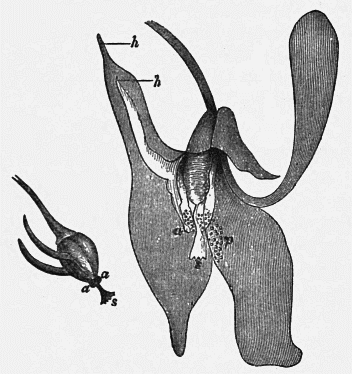 Fig. 61.—Section of the Dog Violet. Lubbock.
A, Anthers and stigma enlarged.
a a, Anthers.
s, Stigma.
p,
Pollen.
h, Honey.
Let us see for a moment how wonderfully this flower is arranged to bring about the carrying of the pollen, as Sprengel pointed out years ago. In the first place,style or stalk of the stigma is very thin and its tip very broad, so that it quivers easily when the bee touches it, and so shakes the anthers apart, while the anthers themselves fold over to make the box, and yet not so tightly but that the dust can fall through when they
Two more flowers still I want us to examine together, and then I hope you will care to look at every flower you meet, to try and see what insects visit it, and how its pollen-dust is carried. These two flowers are the common Bird's-foot trefoil (Lotus corniculatus), and the Early Orchis (Orchis mascula), which you may find in almost any moist meadow in the spring and early summer.
The Bird's-foot trefoil, Fig. 62, you will find almost anywhere all through the summer, and you will know it from other flowers very like it by its leaf, which is not a true trefoil, for behind the three usual leaflets of the clover and the shamrock leaf, it has two small leaflets near the stalk. The flower, you will notice, is shaped very like the flower of a pea, and indeed it belongs to the same family, called the Papilionaceæ or butterfly family, because the flowers look something like an insect flying.
In all these flowers the top petal (sta, Fig. 62) stands up like a
flag to catch the eye of the insect, and for this reason botanists call
it the "standard." Below it are two side-petals w called the "wings,"
and if you pick these off you will find that the remaining two petals
k are joined together at the tip in a shape like the keel of a boat
(2, Fig. 62). For this reason they are called the "keel." Notice as we
pass that these two last petals have in them a curious littled, and if you look inside the "wings" you will notice a
little knob that fits into this hollow, and so locks the two together.
We shall see by-and-by that this is important.
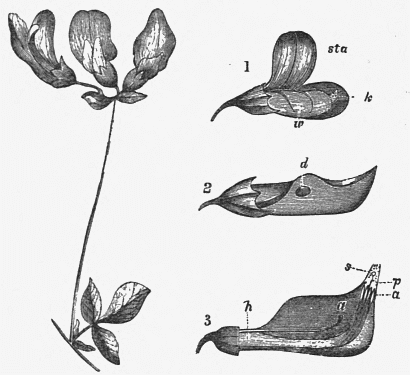 Fig. 62.—Lotus corniculatus, Bird's-foot Trefoil.
1. Full flower: sta, Standard; w, Wings; k, Keel.
2. Keel of
flower: d, Depression into which wings fit.
3. Interior of flower:
s, Stigma; p, Pollen; a, Anthers; h, Place where honey lies.
Next let us look at the half-flower when it is cut open, and see what there is inside. There are ten stamens in all, enclosed with the stigma in the keel; nine are joined together and one is by itself. The anthers of five of these stamens burst open while the flower is still a bud, but the other stamens go on growing, and push the pollen-dust, which is very moists, but as we saw before in the geranium, the stigma is not ripe and sticky yet, and so it does not use the pollen-grains.
Now suppose that a bee comes to the flower. The honey she has to fetch lies inside the tube at h, and the one stamen being loose she is able to get her proboscis in. But if she is to be of any use to the flower she must uncover the pollen-dust. See how cunningly the flower has contrived this. In order to put her head into the tube the bee must stand upon the wings w, and her weight bends them down. But they are locked to the keel k by the knob fitting in the hole d, and so the keel is pushed down too, and the sticky pollen-dust is uncovered and comes right against the stomach of the bee and sticks there! As soon as she has done feeding and flies away, up go the wings and the keel with them, covering up any pollen that remains ready for next time. Then when the bee goes to another flower, as she touches the stigma as well as the pollen, she leaves some of the foreign dust upon it, and the flower uses that rather than its own, because it is better for its seeds. If however no bee happens to come to one of these flowers, after a time the stigma becomes sticky and it uses its own pollen: and this is perhaps one reason why the bird's-foot trefoil is so very common, because it can do its own work if the bee does not help it.
Now we come lastly to the Orchis flower. Mr. Darwin has written a whole
book on the many curious and wonderful ways in which orchids tempt
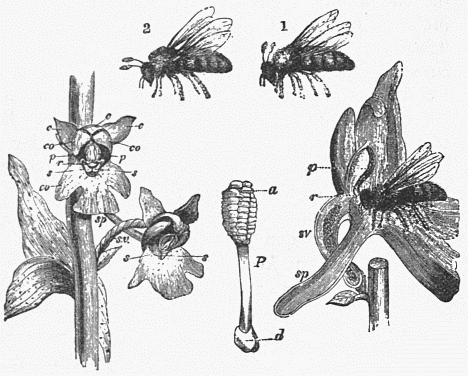 Fig. 63.—Orchis mascula.
c c c, Calyx.
co, co, co, Corolla.
p, Pollen-masses.
r,
Rostellum or lid covering the knob at the end of pollen-masses.
s s,
Stigmas.
P, a Pollinia or pollen-mass, of which a is the pollen and
d the sticky gland which adheres to the head of the bee.
sv,
Seed-vessel.
sp, Spur of the flower.
Let us examine it closely. It has six deep-red covering leaves, three c c c, Fig. 63. belonging to the calyx or outer cup, and three co, co, co, belonging to the corolla or crown of the flower; but all six are coloured alike, except that the large one in front,
But where are the anthers, and where is the stigma? Look just under the arch made by those three bending flower-leaves, and there you will see two small slits, and in these some little club-shaped bodies p p, which you can pick out with the point of a needle. One of these enlarged is shown at P. It is composed of sticky grains of pollen a held together by fine threads on the top of a thin stalk; and at the bottom of the stalk there is a little round body d. This is all that you will find to represent the stamens of the flower. When these masses of pollen, or pollinia as they are called, are within the flower, the knob at the bottom is covered by a little lid r, shutting them in like the lid of a box, and just below this lid r you will see two yellowish lumps s s, which are very sticky. These are the top of the stigma, and they are just above the seed-vessel sv, which you can see in the lowest flower in the picture.
Now let us see how this flower gives up its pollen. When a bee comes to look for honey in the orchis, she alights on the lip, and guided by the lines makes straight for the opening just in front of the stigmas s s. Putting her head into this opening she pushes down into the spur sp, where by biting the inside skin she gets some juicy sap. Notice that she has to bite, which takes time.
You will see at once that she must touch the stigmas in going in, and so give them any pollen she has on her head. But she also touches the little lid r and it flies instantly open, bringing the glands d. These glands are moist and sticky, and while she is gnawing the inside of the spur they dry a little and cling to her head and she brings them out with her. Darwin once caught a bee with as many as sixteen of these pollen-masses clinging to her head.
But if the bee went into the next flower with these pollinia sticking upright, she would simply put them into the same slits in the next flower, she would not touch them against the stigma. Nature, however, has provided against this. As the bee flies along, the glands sticking to its head dry more and more, and as they dry they curl up and drag the pollen-masses down, so that instead of standing upright, as in 1, Fig. 63, they point forwards, as in 2.
And now, when the bee goes into the next flower, she will thrust them right against the sticky stigmas, and as they cling there the fine threads which hold the grains together break away, and the flower is fertilized.
If you will gather some of these orchids during your next spring walk in the woods, and will put a pencil down the tube to represent the head of the bee, you may see the little box open, and the two pollen-masses cling to the pencil. Then if you draw it out you may see them gradually bend forwards, and by thrusting your pencil into the next flower you may see the grains of pollen break away, and you will have followed out the work of the bee.
Do not such wonderful contrivances as these make us long to know and understand all the hidden
Long as we have known how useful honey was to the bee, and how it could only get it from flowers, yet it was not till quite lately that we have learned to follow out Sprengel's suggestion, and to trace the use which the bee is to the flower. But now that we have once had our eyes opened, every flower teaches us something new, and we find that each plant adapts itself in a most wonderful way to the insects which visit it, both so as to provide them with honey, and at the same time to make them unconsciously do it good service.
And so we learn that even among insects and flowers, those who do most for others, receive most in return. The bee and the flower do not either of them reason about the matter, they only go on living their little lives as nature guides them, helping and improving each other. Think for a moment how it would be, if a plant used up all its sap for its own life, and did not give up any to make the drop of honey in its flower. The bees would soon find out that these particular flowers were not worth visiting, and the flower would not get its pollen-dust carried, and would have to do its own work and grow weakly and small. Or suppose on the other hand that the bee bit a hole in the bottom of the flower, and so got at the honey, as indeed they sometimes do; then she would
But this, as you see, is not the rule. On the contrary, the flower feeds the bee, and the bee quite unconsciously helps the flower to make its healthy seed. Nay more; when you are able to read all that has been written on this subject, you will find that we have good reason to think that the flowerless plants of the Coal Period have gradually put on the beautiful colours, sweet scent, and graceful shapes of our present flowers, in consequence of the necessity of attracting insects, and thus we owe our lovely flowers to the mutual kindliness of plants and insects.
And is there nothing beyond this? Surely there is. Flowers and insects, as we have seen, act without thought or knowledge of what they are doing; but the law of mutual help which guides them is the same which bids you and me be kind and good to all those around us, if we would lead useful and happy lives. And when we see that the Great Power which rules over our universe makes each work for the good of all, even in such humble things as bees and flowers; and that beauty and loveliness come out of the struggle and striving of all living things; then, if our own life be sometimes difficult, and the struggle hard to bear, we learn from the flowers that the best way to meet our troubles is to lay up our little drop of honey for others, sure that when they come to sip it they will, even if unconsciously, give us new vigour and courage in return.
And now we have arrived at the end of those sub
But at least we have passed through the gates, and have learnt that there is a world of wonder which we may visit if we will; and that it lies quite close to us, hidden in every dewdrop and gust of wind, in every brook and valley, in every little plant or animal. We have only to stretch out our hand and touch them with the wand of inquiry, and they will answer us and reveal the fairy forces which guide and govern them; and thus pleasant and happy thoughts may be conjured up at any time, wherever we find ourselves, by simply calling upon nature's fairies and asking them to speak to us. Is it not strange, then, that people should pass them by so often without a thought, and be content to grow up ignorant of all the wonderful powers ever active in the world around them?
Neither is it pleasure alone which we gain by a study of nature. We cannot examine even a tiny sunbeam, and picture the minute waves of which it
And so our wanderings in the Fairy-land of Science will have given us
much pleasant knowledge, and taught us in many ways how to regulate our
own lives, while they may also serve a far higher purpose, by showing us
that the forces of nature, whether they are apparently mechanical, as in
gravitation or heat, or intelligent, as in living beings, are one and
all the voice of the Great Creator, and speak to us of His Nature and
His Will.
